GEMMA HALL

People-first thinking.
AI-assisted building.

I care about understanding people: what they are trying to do, what matters to them and what would make an experience more impactful. I work across digital products, research, prototyping and content, using generative AI tools to explore ideas and create product concepts, imagery and video.

A decade in broadcast news taught me to think about audiences, ask better questions and find the clearest way to communicate an idea. I still bring that instinct into how I research, build and create.

Illustrated portrait of Gemma Hall with television colour bars over her face
AI + UX Toolkit: Methods: user interviews, moderated usability testing, card sorting (open and stakeholder), tree testing, wireframe and prototype testing, Wizard-of-Oz testing, surveys, UX reviews and research synthesis. AI and content: ChatGPT, Claude, Perplexity, NotebookLM, Midjourney and ElevenLabs. AI video: Runway, Veo and Synthesia. AI prototyping: Soul Machines, Figma Make, Lovable and FlutterFlow. UX research and surveys: Microsoft Forms, Google Forms, Typeform, SurveyMonkey and Dovetail. UX testing: Maze, Optimal Workshop and UserTesting. Design and collaboration: Figma, Miro and FigJam. Analytics: Google Analytics and Hotjar.

CULTURE AND EDUCATION / CLIENT WORK

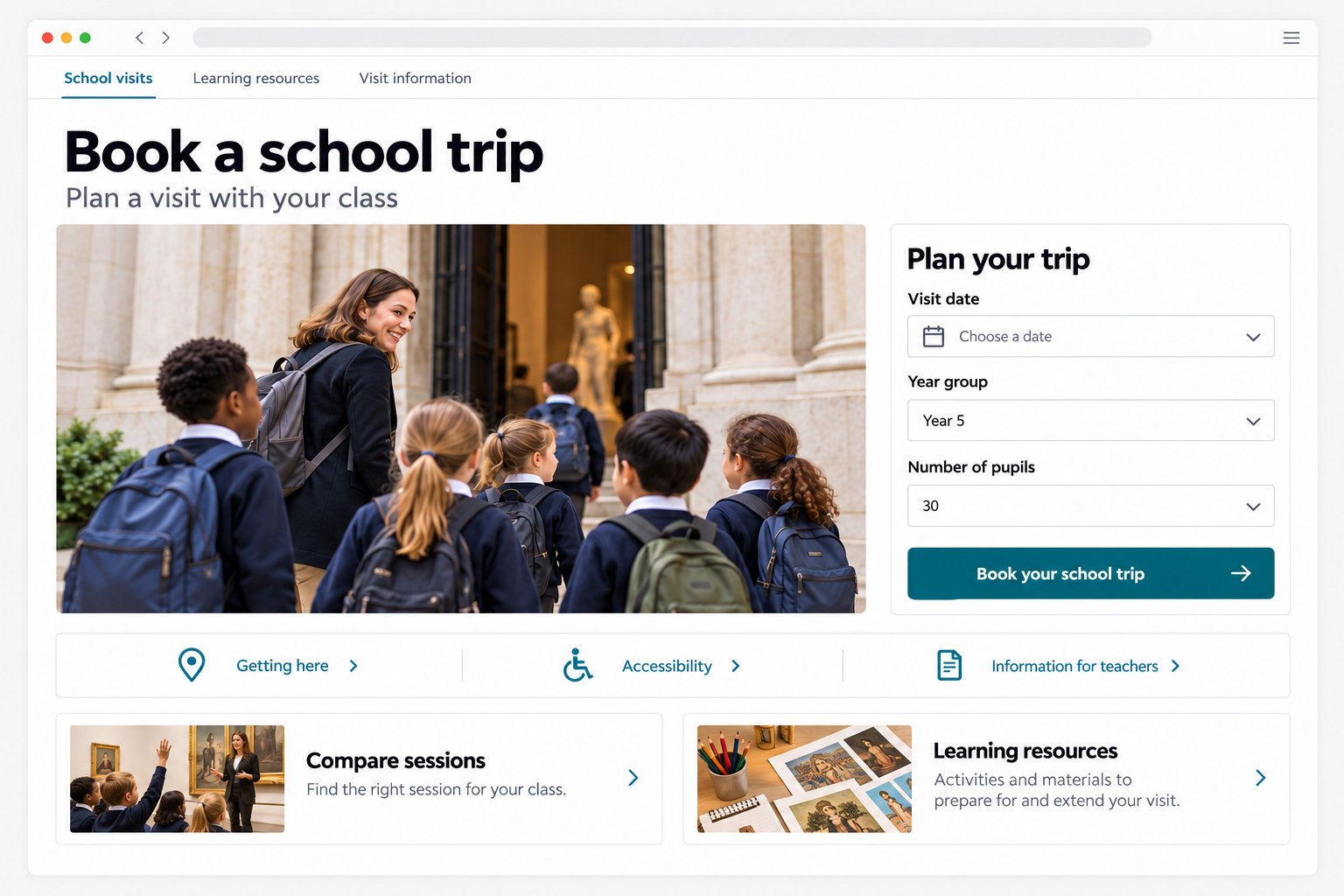
Schools digital experience

Teachers needed to know whether a visit would work for their class before committing to a booking.

The work

Client work for a national heritage organisation, delivered through UX consultancy Gain. The project redesigned the website’s schools section into a dedicated schools hub, covering information architecture, the school trip booking journey and the visual identity of the schools experience.

I planned and ran four rounds of moderated remote research from May to July 2026. The research involved 24 UK teachers: eight primary (KS1/KS2), eight secondary (KS3/KS4) and eight SEND, recruited through the client’s contacts and independently. I investigated how they planned visits, found learning resources, chose sessions and worked through booking.

What I learned

Practical constraints shaped the decision as much as the learning offer. Capacity, timings, accessibility and arrival and departure arrangements needed to be clear early enough for teachers to judge whether a visit was workable.

What changed

I used recurring patterns across the rounds to refine the navigation, content and booking prototypes. The recommendations brought key information forward, made session choices easier to assess and connected resources more closely to teachers’ planning. I brought the findings together in a report and stakeholder presentation showing how the design changed across the four rounds. The handover included 19 recommendations prioritised by urgency for implementation.

Client work through Gain / May to July 2026 / Four research rounds
FOUR ROUNDS OF MODERATED REMOTE RESEARCH

  1. 01Discovery and early validationOpen and internal stakeholder card sorting, low-fidelity wireframe testing and interviews.
  2. 02Mid-fidelity evaluationWireframe evaluation using task-based scenarios.
  3. 03Information architecture validationTree testing to validate the information architecture.
  4. 04End-to-end testingHigh-fidelity booking prototype testing and visual identity validation.

FINDINGS → DESIGN CHANGES

Finding

Teachers needed practical information earlier.

Change

Bring capacity, timings, accessibility and logistics forward.

Finding

Teachers needed to compare sessions more easily.

Change

Make session details clearer and easier to compare.

Finding

Learning resources were part of planning.

Change

Connect resources more clearly to the visit journey.
/ DIGITAL LEARNING / UX REVIEW

Wordless Stories

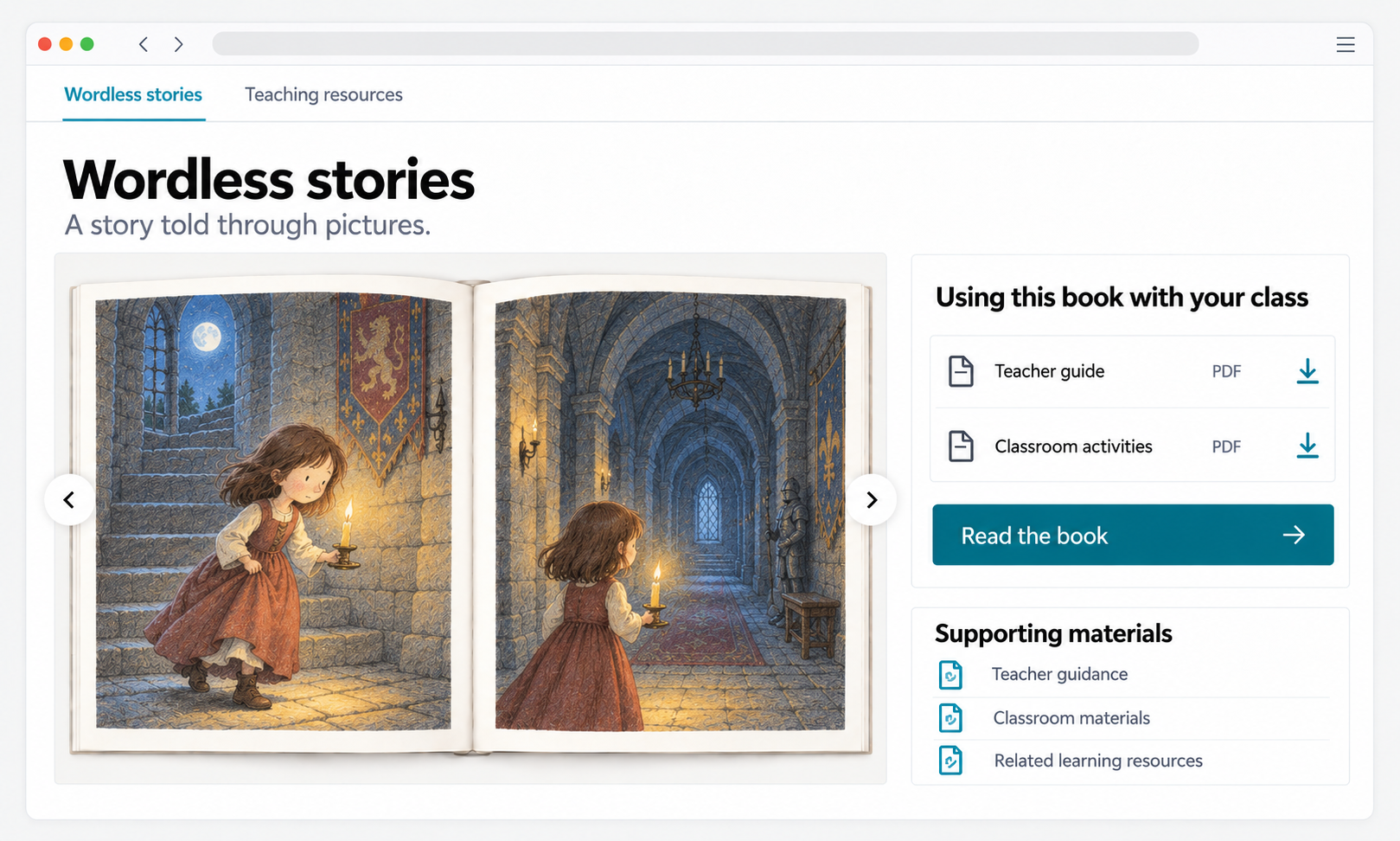
A UX review of a digital learning experience, focused on how teachers move from a visual story to the guidance and materials they need to use it in class.

I examined how teachers found the stories, whether each page made its purpose clear, and how easily they moved between the story, classroom guidance and supporting resources.

I recommended clearer page hierarchy, guidance closer to each story, better grouped resources and stronger signposting from the learning hub.

Simplified Wordless Stories interface showing a picture-only storybook, classroom guidance and supporting resources.
Original project materials cannot be shared publicly. These visuals are deliberately simplified recreations, included to illustrate the work without reproducing the original designs.

MSc PROJECT / CAPGEMINI FROG

EdenAI
Generative AI coaching

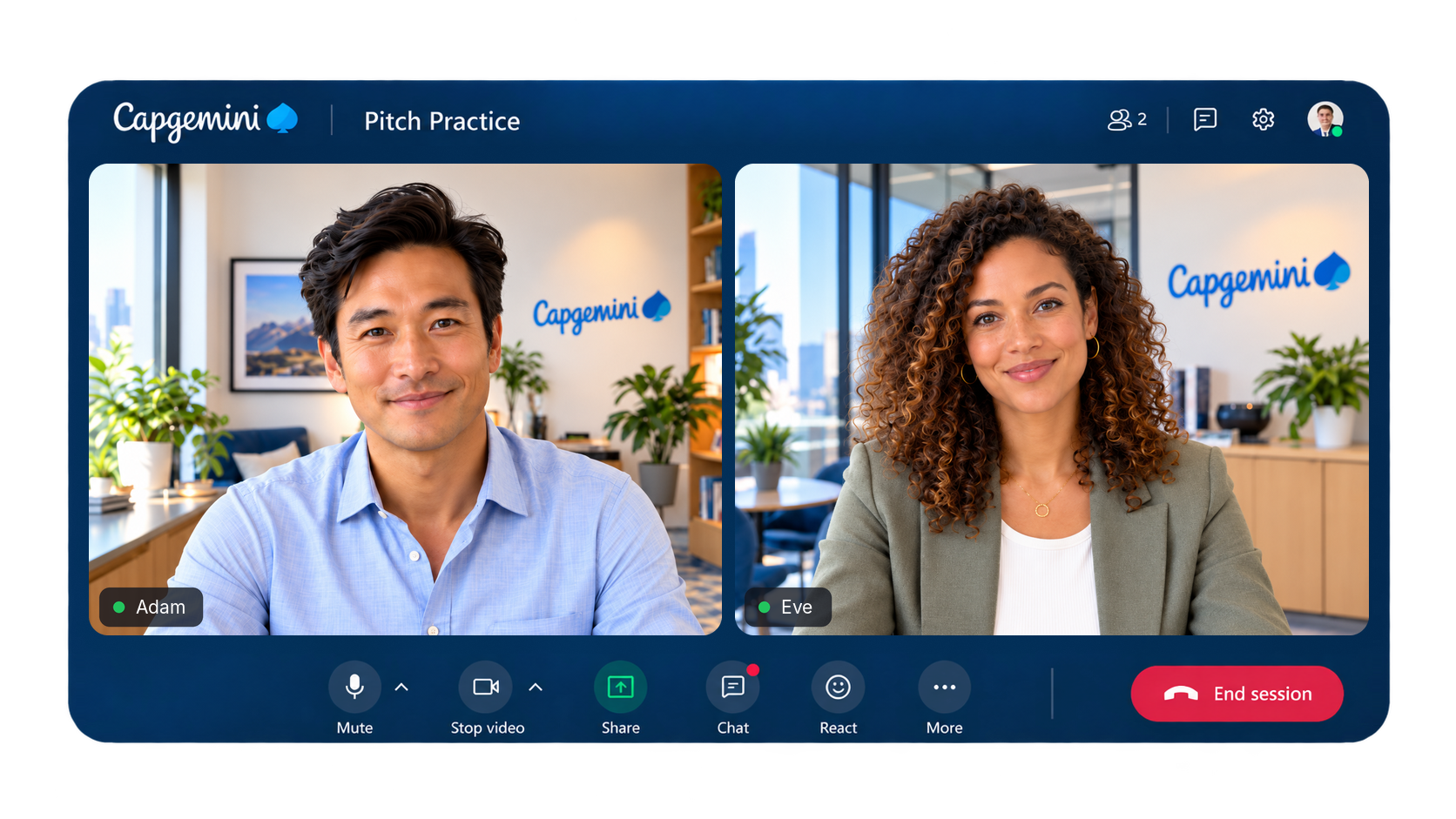
Adam and Eve in the Capgemini Pitch Practice coaching interface

Working AI coaching experience built in Soul Machines, with an LLM connected via OpenAI and grounded in a sales training dataset I curated to deliver live coaching and feedback.

A UX research and AI product design project developed during my MSc User Experience Engineering, with Capgemini frog as the industry partner.

I explored how people practise sales pitches and use feedback, then translated the research into an AI coaching experience. I considered what made feedback useful, clear and trustworthy, and where people needed control.

I developed two prototypes and evaluated both with users. Between the first and second prototypes, I refined how feedback was presented during practice, using the findings from the first evaluation.

What testing showed

8/10Saw value in the concept
7/10Found the later version more engaging
8/10Were interested in using it
10/10Supported further development

Exploratory evaluation with 10 participants.

Product concepts

AI TRIAGING CONCEPT / SERVICE EXPERIENCE

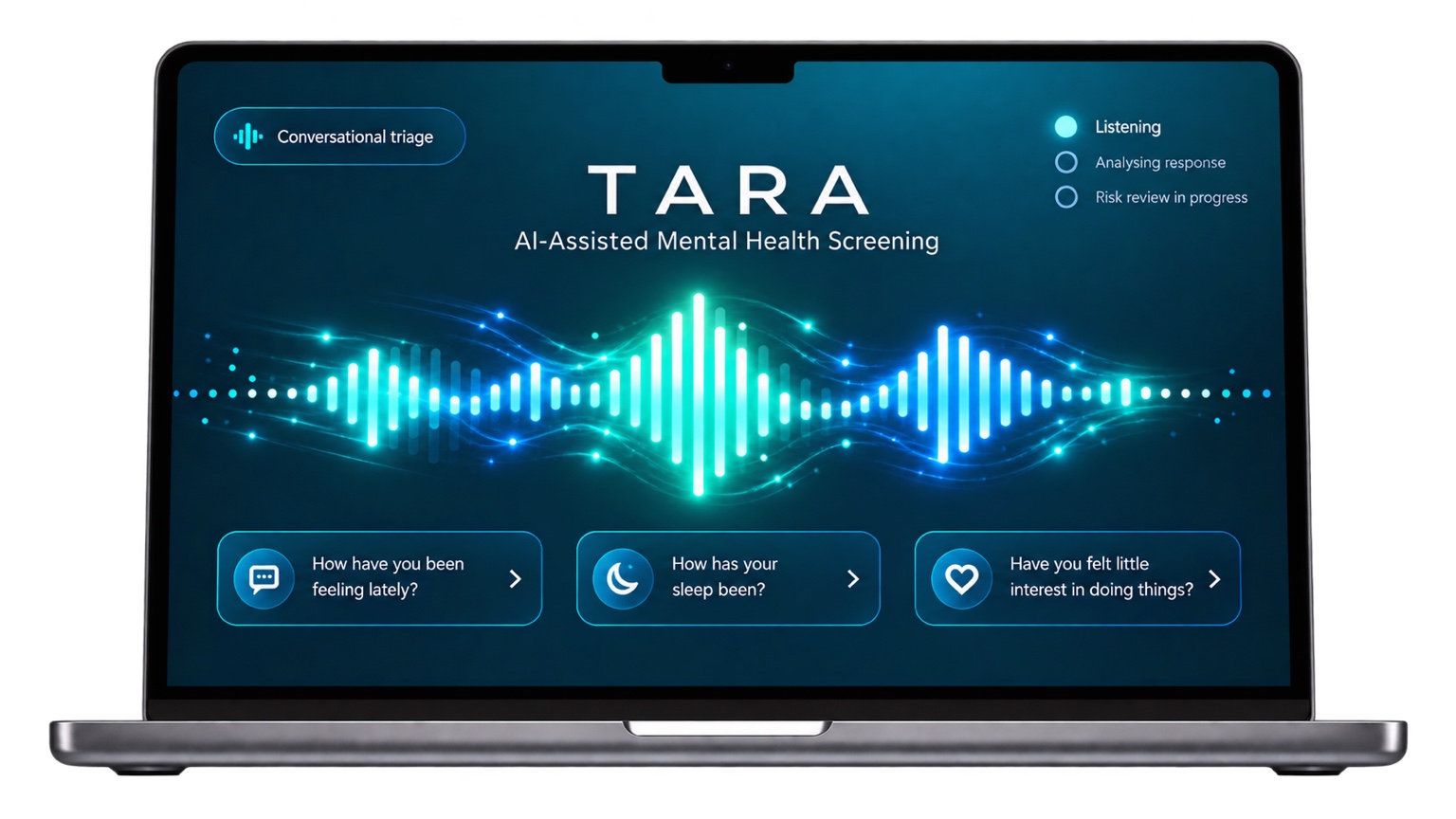
AI triaging assistant

Could people describe their mental health needs and be guided towards an appropriate therapist without first navigating a complicated service?

I defined the user problem and shaped the journey, then ran Wizard-of-Oz testing with a prototype before the AI was built. I explored what people expected the system to understand and how they interpreted its responses, including where they needed trust, reassurance, control and clearer communication about uncertainty.

I refined the experience around those findings. Testing early helped identify where the experience needed more clarity, reassurance and user control before committing to the technology.

TARA mental health screening interface on a laptop, with a gently pulsing voice waveform

PRODUCT THINKING / UX DESIGN

Roomies

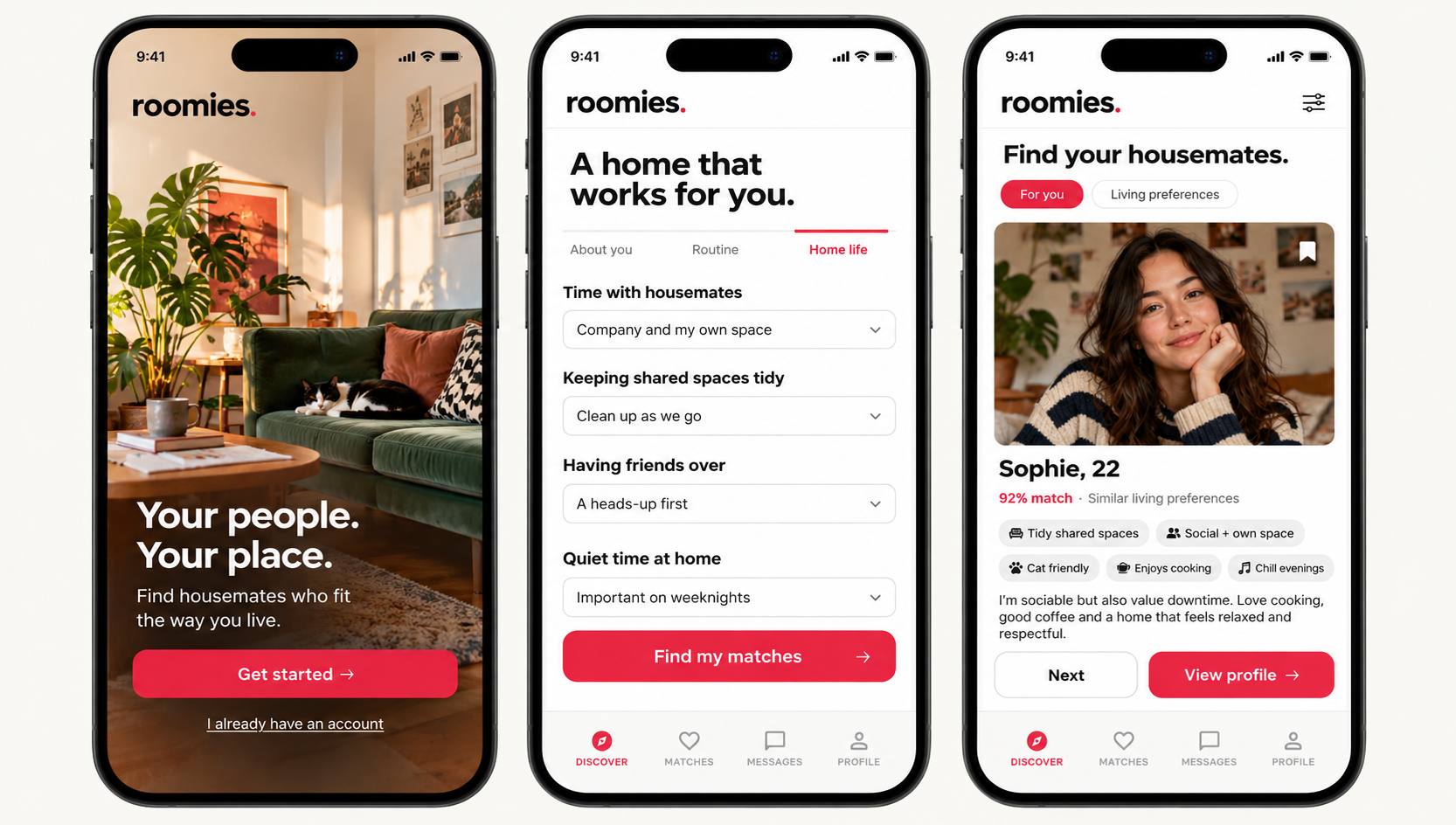
Finding someone who needs a room is easy. Finding someone you would actually want to live with is harder.

I researched how people judge compatibility and what they need to know before making contact. Those findings shaped the profiles, matching idea and wider journey. I refined the concept through research and prototyping, then built a working version in FlutterFlow.

Roomies app mockup showing a welcome screen, housemate compatibility quiz and illustrative housemate discovery profile

CREATIVE PRACTICE / VIDEO

AI generative video

I combine conventional camera work and editing with generative tools to create video content.

My broadcast background gives me a grounding in capturing and shaping footage. I bring that experience together with tools such as Midjourney, Runway and Veo to explore and generate imagery and moving sequences, then use editing and sound to give the material pace and a coherent story.

AI expands what I can make and test; decisions about what belongs in the final cut still come from judgement, craft and the story I want to tell.

About

Former broadcast news field operator turned researcher, designer and content maker.

My background is in broadcast news across Australia and the UK, mostly filming and editing. It was a very hands-on way to learn how to make sense of information quickly, work with different people and turn something complicated into something clear.

Over time, I became more interested in digital products and the decisions that shape how people experience them. That led me to an MSc in User Experience Engineering at Goldsmiths, where I graduated with Distinction, and into UX and digital product work.

I still draw on both parts of that background now. I like the mix of research, making and experimentation, and I use generative AI and low-code tools to push ideas further, whether that means prototyping something, creating imagery or producing video content.

View my CV
  • Research
    • User needs and behaviour
    • Discovery and problem framing
    • Qualitative and quantitative evidence
    • Research planning and synthesis
  • Research-led design
    • User journeys and flows
    • Interaction and content decisions
    • Prototyping and iteration
    • Translating findings into design changes
  • Evaluation
    • Usability and experience reviews
    • Testing concepts and prototypes
    • Identifying friction and gaps
    • Validating design decisions
  • Product thinking
    • Defining the right problem
    • End-to-end experience
    • Prioritising what matters
    • Connecting user and business needs
  • AI and rapid prototyping
    • Generative AI workflows
    • AI product experiences
    • Low-code prototyping
    • Image, video, voice and audio generation
  • Communication
    • Research findings and recommendations
    • Stakeholder presentations
    • Clear storytelling and visual communication
    • Making complex information easier to understand

I move from evidence to direction, prototype and test ideas, then explain what needs to change. AI helps me explore and build sooner; research, judgement and user feedback guide the decisions.

CONTACT

Get in touch.

I’m interested in roles across UX research, consultancy, product design and digital content, where I can combine research, prototyping, generative AI and storytelling to shape products, services, campaigns and video content.

gmfhall@gmail.com